
NGO Website Design in India: 4 Real Projects We Built (With Live Links)
Four real NGO websites we designed and shipped in India — a donor platform with 12,458+ registered donors, two foundation sites and an education society — with the exact structure, tech and results behind each.
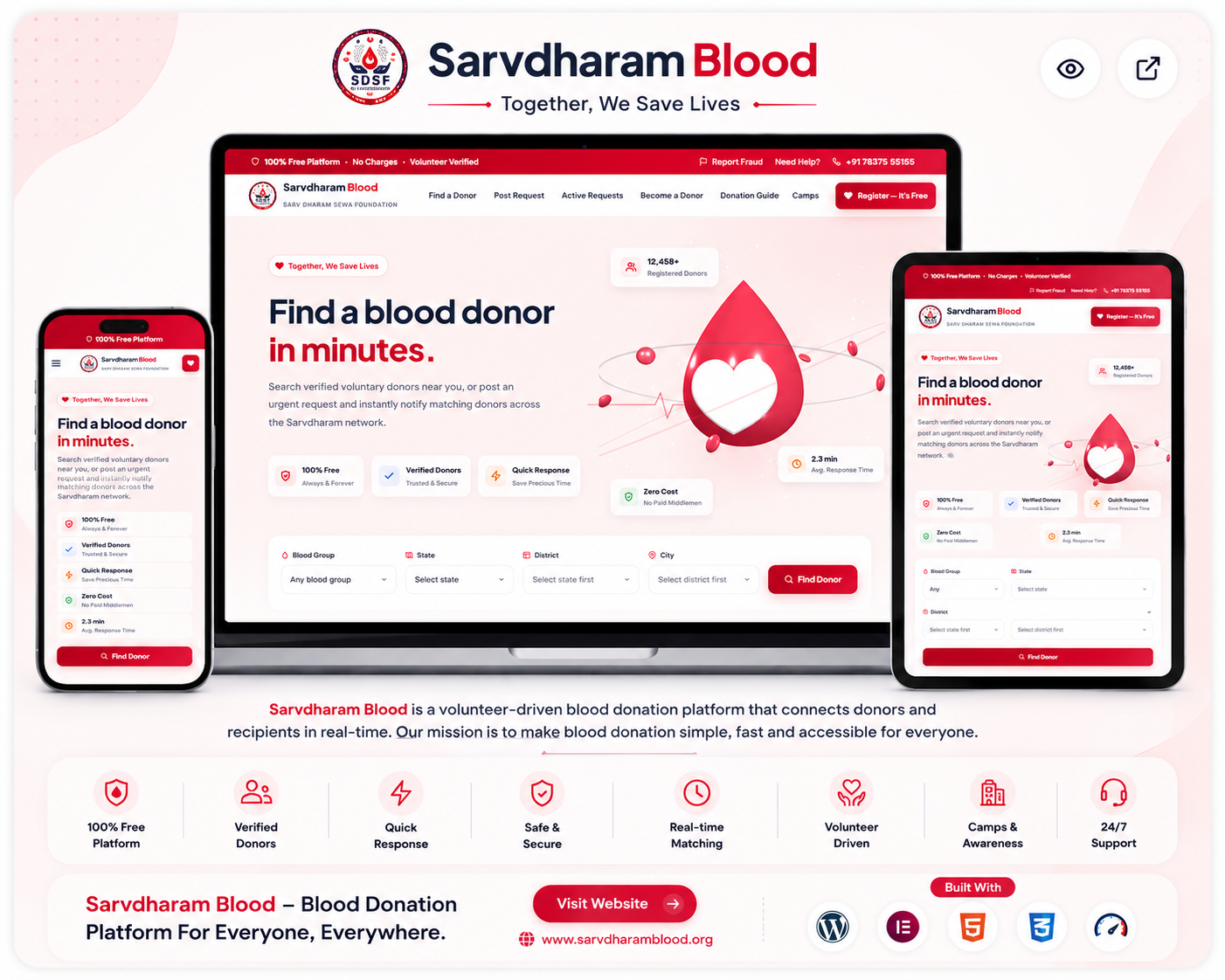
Short answer: A good NGO website in India needs four things — a trust-first homepage, a frictionless donate flow, transparent proof (registration numbers, 80G/12A, reports), and clean technical SEO so Google and AI assistants can surface you. Below are four NGO websites we actually designed and shipped, with live links, what each one solved, and what it delivered.
Key takeaways
- NGOs lose donations to trust gaps, not design taste. Registration proof, real photos and clear fund usage beat animations.
- A donor or volunteer should reach the action in one scroll and one click.
- Structured data (Organization + NGO schema) helps you appear in AI answers like "verified blood donor NGO in Delhi".
- Every site below is live, indexable and built to be updated by non-technical staff.
1. Sarv Dharm Blood — Pan-India Blood Donor Platform
Live site: blood.sarvdharmsewafoundation.org Case study: Read the full project
The challenge
Blood requests in India are still coordinated over WhatsApp forwards. The foundation needed a searchable, verified donor registry that worked on a low-end Android phone, on patchy 4G, in an emergency — where every second counts.
What we built
- A donor registry with blood-group and city filters, optimised so search returns in under a second
- A short, mobile-first registration form (no login wall, no dead fields)
- Direct call/WhatsApp actions on every donor card
- An admin view for the foundation to verify donors and remove stale entries
The result
| Metric | Outcome |
|---|---|
| Registered verified donors | 12,458+ |
| Average response time | 2.3 minutes |
| Coverage | 28 states |
The lesson that transfers to any NGO: remove every step between intent and action. Each extra form field on the donor signup measurably cut completions.
2. Sarv Dharam Sewa Sangh — NGO
Live site: sarvdharamsewasangh.org Case study: Read the full project
One of the earliest NGO builds we did, and still running. The brief was inbound: the organisation wanted people searching for community and welfare work to find them without paying for ads.
What we built
- A content architecture built around the causes people actually search for, not internal department names
- Subdomain-based tool sections so new initiatives can launch without rebuilding the main site
- Lightweight pages that load fast on rural connections
- On-page SEO: descriptive titles, internal linking between causes, and image alt text in plain language
The result
Multiple initiatives now live under one domain, with inbound SEO as the primary discovery channel — no ad spend.
3. Sarv Dharm Sewa Foundation — NGO
Live site: sarvdharmsewafoundation.org Case study: Read the full project
The challenge
The foundation needed a credible public face — the kind a grant committee, a CSR partner and a first-time donor can all read in two minutes and come away convinced.
What we built
- A homepage that leads with mission, proof and impact numbers before it asks for anything
- Programme pages with real photography and outcomes, not stock imagery
- A transparency block: registration details, governance and contact
- A modern, maintainable stack the team can update themselves
The result
The site supported a successful software grant approval — the kind of application that is routinely rejected when an organisation has no verifiable web presence.
4. Buddha Education Society — NGO
Live site: budhhaeducationsociety.org Case study: Read the full project
An education-focused society that needed a website capable of doing three jobs at once: explain the work to donors, publish updates for the community, and act as an official reference for partners.
What we built
- A clear programme hierarchy (education, welfare, events)
- An updates section the team can publish to without a developer
- Contact and donation touchpoints on every page, never buried in a footer
- Full mobile-first delivery — over 80% of this audience arrives on a phone
The NGO website checklist we use on every build
Steal this. It applies whether we build your site or you do it yourself.
- Trust above the fold. Registration number, years active, people served.
- One primary action. Donate, or volunteer, or request help. Not all three competing.
- Proof, not adjectives. Photos of real work, named beneficiaries where consent allows, published reports.
- Speed. Under 2.5s Largest Contentful Paint on 4G. Compress every image.
- Schema markup.
Organization/NGOstructured data with address, contact and social profiles so AI search can cite you correctly. - A sitemap and clean robots.txt so Google discovers new programme pages automatically.
- Editable by staff. If updating a page needs a developer, the site goes stale in three months.
What NGO website design costs in India
Honest ranges, based on what we actually quote:
- Starter informational site (5–7 pages): enough for registration, programmes, gallery and contact.
- Donation-enabled site: adds a payment gateway, receipts and donor records.
- Platform build (like the blood donor registry): custom database, search, admin panel and ongoing maintenance.
You can see current, itemised numbers on the pricing page — no "contact us for a quote" games.
Want the same for your organisation?
We design and build NGO and foundation websites end to end: strategy, design, development, SEO setup and Search Console configuration. Explore our services, browse more work, or start a project and get a plan within 24 hours.
FAQ
How much does an NGO website cost in India?
A simple informational NGO website typically starts in the low tens of thousands of rupees, while a donation-enabled site with payment gateway integration and donor records costs more. Custom platforms with searchable databases and admin panels are quoted per scope. Itemised current pricing is published on our pricing page.
What pages does an NGO website need?
At minimum: Home, About with registration and governance details, Programmes or Causes, Impact or Gallery, Donate, and Contact. Adding a Reports or Transparency page significantly improves donor and grant-committee confidence.
Do NGO websites need SEO?
Yes. Most Indian NGOs cannot afford sustained ad spend, so organic search is the main discovery channel. Cause-focused pages, local keywords, structured data and a valid sitemap let both Google and AI assistants surface your organisation to people already searching for that help.
Can we accept online donations on the website?
Yes. We integrate Indian payment gateways that support UPI, cards and netbanking, with automated receipts and a donor record in the admin panel. 80G receipt handling can be built into the same flow.
How long does an NGO website take to build?
A standard informational NGO site takes about 2–3 weeks from content handover. Donation-enabled sites take 3–4 weeks. Custom platforms like the pan-India donor registry take longer and are scoped individually.
Work with me
Want the same for your business?
I help founders in India and worldwide ship fast, SEO-ready websites that rank on Google — and get cited by AI search.
Start a projectKeep reading
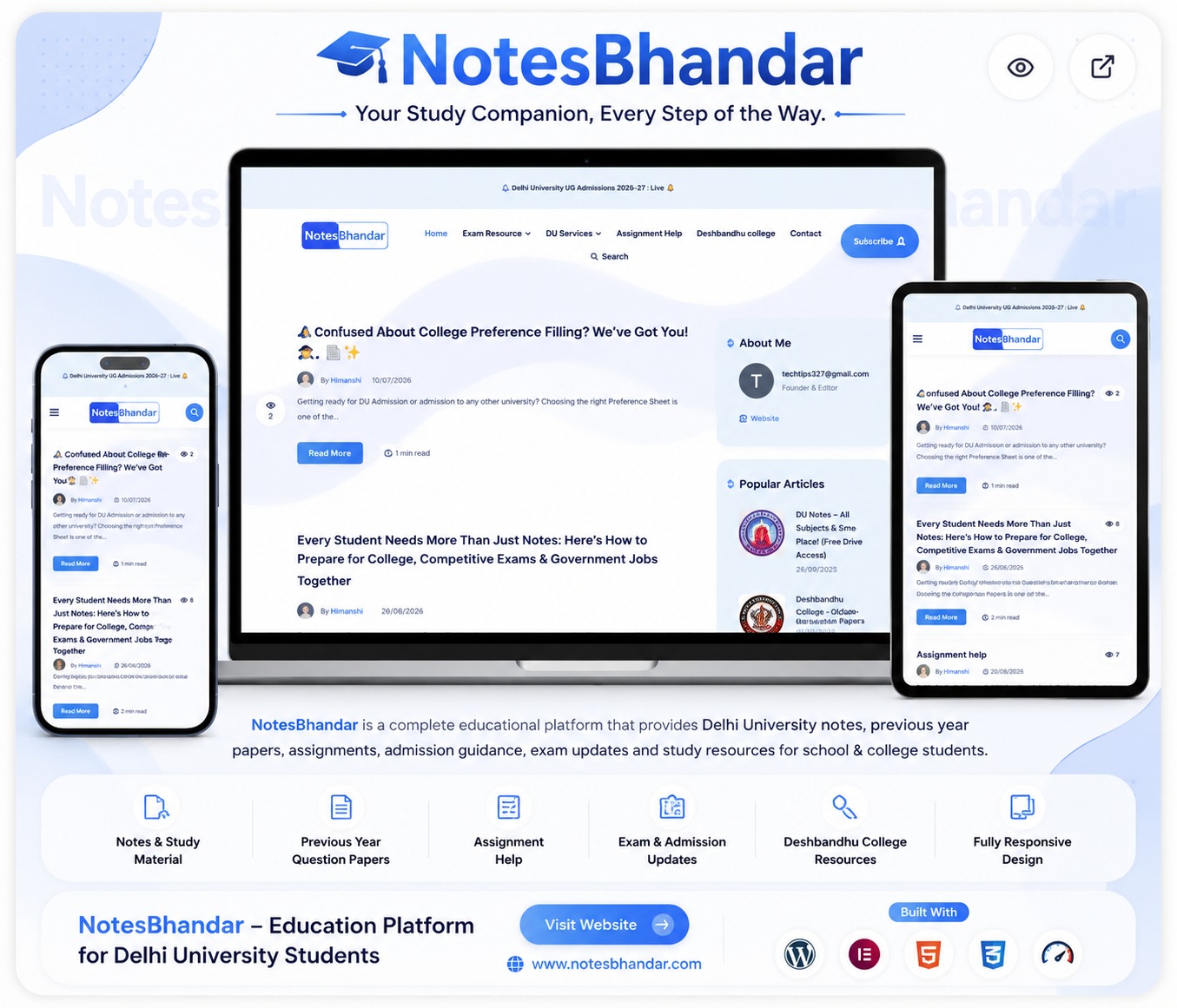
Building Content & Utility Platforms That Rank: NotesBhandar and FormSarthi Case Study

From Idea to Live Website: 3 Business Sites We Designed (Salon, Travel & Spiritual eCommerce)
Premium Offshore Web Design Partner in India

How to Hire a Web Designer in Delhi in 2026 (Without Wasting Lakhs)