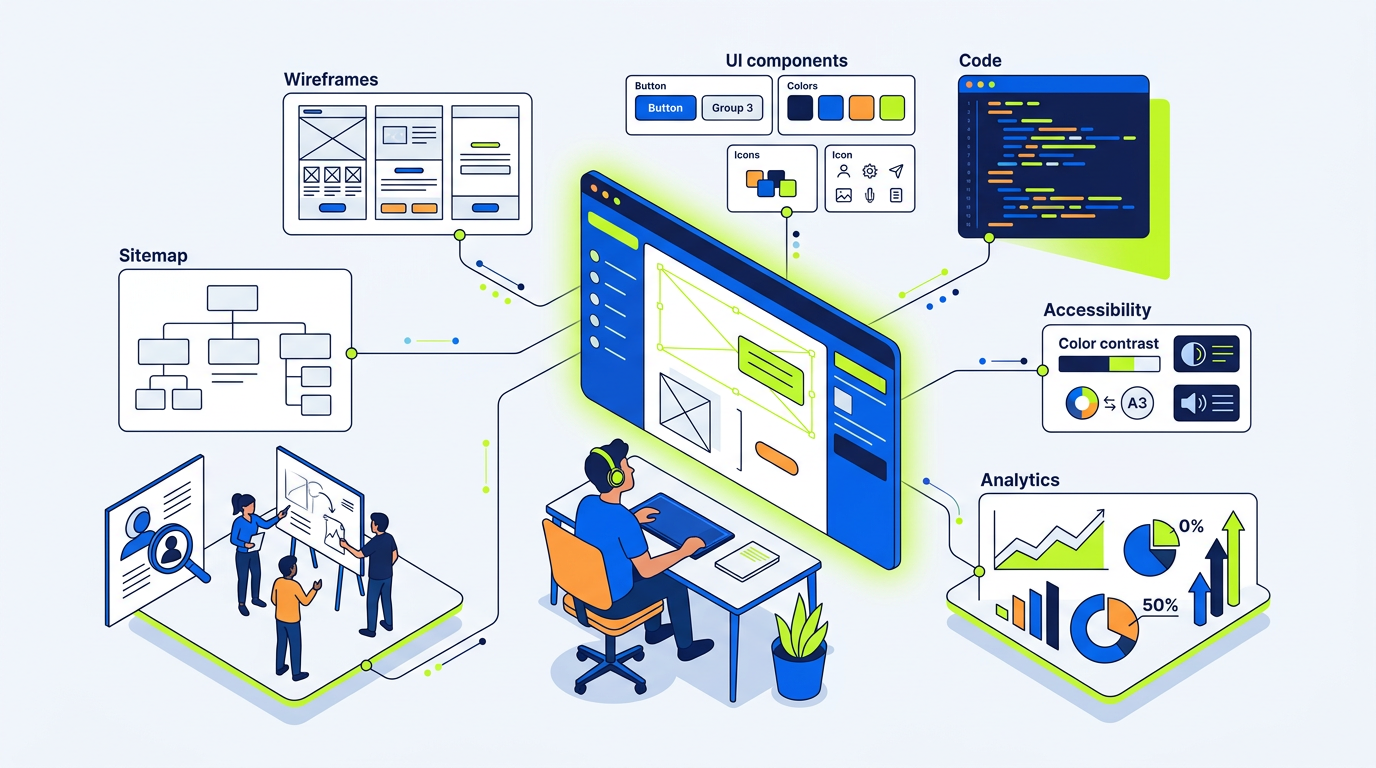
From Idea to Live Website: 3 Business Sites We Designed (Salon, Travel & Spiritual eCommerce)
Three real small-business websites — a salon serving 12+ countries, a travel booking platform, and a spiritual products store — with the brief, the build decisions and the outcome for each.
Short answer: A small-business website earns its money in three places — how fast it loads, how obvious the next action is, and whether Google can understand what you sell. Below are three businesses we took from idea to live site, with links you can open right now and the reasoning behind each build.
Key takeaways
- Every one of these sites was designed mobile-first — 70–85% of their traffic is on phones.
- Each has exactly one primary conversion action per page.
- SEO was built in from day one (titles, schema, sitemap), not bolted on later.
- None of them use a bloated page builder. Speed was a design constraint, not an afterthought.
1. Buddha Beauty Point — Salon & Beauty Services
Live site: buddhabeautypoint.com Case study: Read the full project
The brief
A salon with a real reputation and no digital footprint. Enquiries came only through walk-ins and word of mouth, and the owner was fielding the same pricing questions on WhatsApp all day.
What we built
- A services page with all 10+ treatments listed with clarity — so the pricing conversation happens before the call, not during it
- A booking/enquiry capture flow wired straight to WhatsApp and a lead inbox
- Local SEO setup so "salon near me" style searches in the service area can surface the business
- A gallery section that loads fast on mobile data instead of stalling on huge images
The result
| Metric | Outcome |
|---|---|
| Services listed | 10+ |
| Countries reached | 12+ |
| Lead capture | Live |
The single highest-impact change was publishing the service list publicly. It filtered out mismatched enquiries and made every remaining call warmer.
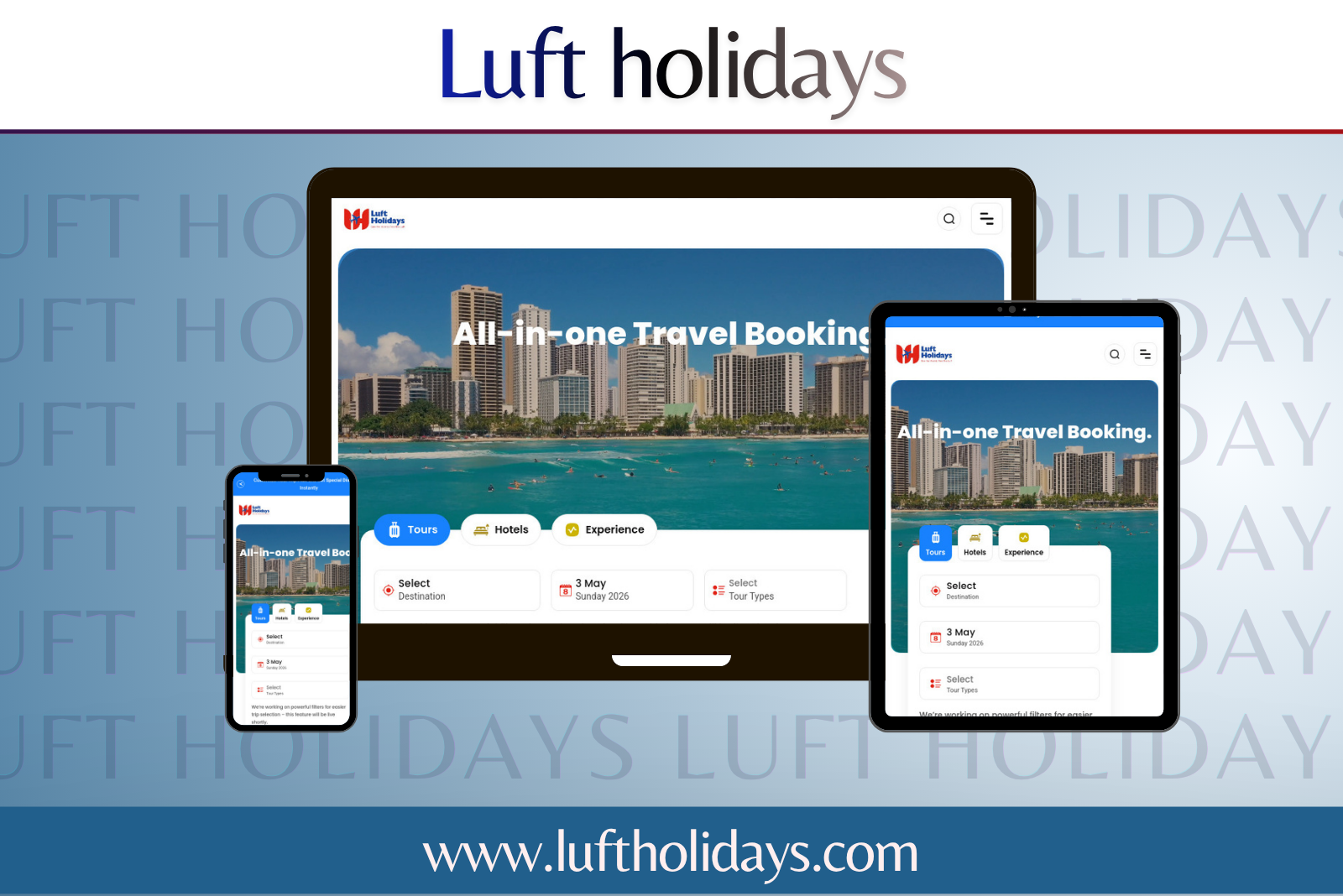
2. Luft Holidays — Travel Booking Platform
Live site: luftholidays.com Case study: Read the full project
The brief
A travel business that needed to look as credible online as its competitors with 10× the marketing budget — and needed enquiry handling that didn't fall apart during peak season.
What we built
- A package-driven architecture: destinations, itineraries and enquiry forms that scale as new packages are added
- Trust framing throughout — real itineraries, inclusions, and clear pricing signals
- An end-to-end booking enquiry flow rather than a generic "contact us" dead end
- Fast image handling, because travel sites live or die on photography weight
The result
An end-to-end booking platform, delivered as a complete scope: design, build, content structure and launch. Travel is a trust-heavy category — the site was engineered so a first-time visitor can verify the business in under 30 seconds.
3. VediCosmic — Spiritual Tools & Products
Live site: vedicosmic.com Case study: Read the full project
The brief
A niche eCommerce store in the spiritual and wellness category, where product trust and storytelling matter more than discount banners.
What we built
- A product catalogue that leads with meaning and use, not just SKU specs
- Clean category structure so search engines can index every product type
- A visual identity that fits the category without slipping into cliché
- A checkout path with no unnecessary steps
Why it matters for any eCommerce build
In niche categories, the product page is the sales page. Generic template stores lose here because they treat a ritual item exactly like a phone case. Content depth on the product page is the differentiator — and it happens to be exactly what AI search engines quote.
The pattern behind all three builds
Different industries, same underlying process:
- Define the one action. Book, enquire, or buy. Everything else on the page supports it.
- Answer the objection early. Price, credibility, delivery — put it above the fold, not in an FAQ nobody scrolls to.
- Design for the phone first. Then let it expand to desktop, never the reverse.
- Ship SEO on day one. Unique titles and descriptions,
OrganizationandProduct/Serviceschema, a real sitemap, and Search Console connected before launch. - Keep it editable. The client should be able to add a service, a package or a product without calling us.
- Measure. Lead source tracking from launch, so we know which pages actually earn.
What this costs and how long it takes
- Brochure / service business site: 2–3 weeks
- Catalogue or package-driven site: 3–4 weeks
- eCommerce store: 4–6 weeks depending on catalogue size
Transparent, itemised numbers are on the pricing page. If you want the full stack — design, build, SEO and ongoing support — that's the Gold package.
Want a website that actually sells?
Browse more of our work, see what we offer, or tell us about your business. You can also request a free website mockup of your business within 48 hours — no commitment, just a look at what your site could be.
FAQ
How much does a small business website cost in India?
A professional small-business website typically ranges from a compact brochure site to a full catalogue or eCommerce build, priced by page count, features and integrations. Current itemised pricing is published on our pricing page so you can budget before you talk to us.
How long does it take to build a business website?
Around 2–3 weeks for a service business site, 3–4 weeks for a package or catalogue site, and 4–6 weeks for eCommerce — measured from the date content and images are handed over.
Do you build eCommerce stores as well as brochure sites?
Yes. VediCosmic is a live example of a niche eCommerce build, covering catalogue structure, product pages, checkout and search-engine-friendly category architecture.
Will my website rank on Google after launch?
Ranking depends on competition and content, but every site we build launches with the technical foundation in place: unique metadata, structured data, a valid sitemap, fast load times and Google Search Console connected. That is what makes ranking possible rather than accidental.
Can I update the website myself afterwards?
Yes. Every build is handed over with an admin area or CMS so you can add services, packages, products and images without a developer.
Work with me
Want the same for your business?
I help founders in India and worldwide ship fast, SEO-ready websites that rank on Google — and get cited by AI search.
Start a projectKeep reading
What a Conversion-Focused Website Costs in the US vs India — and What Changes at Each Budget
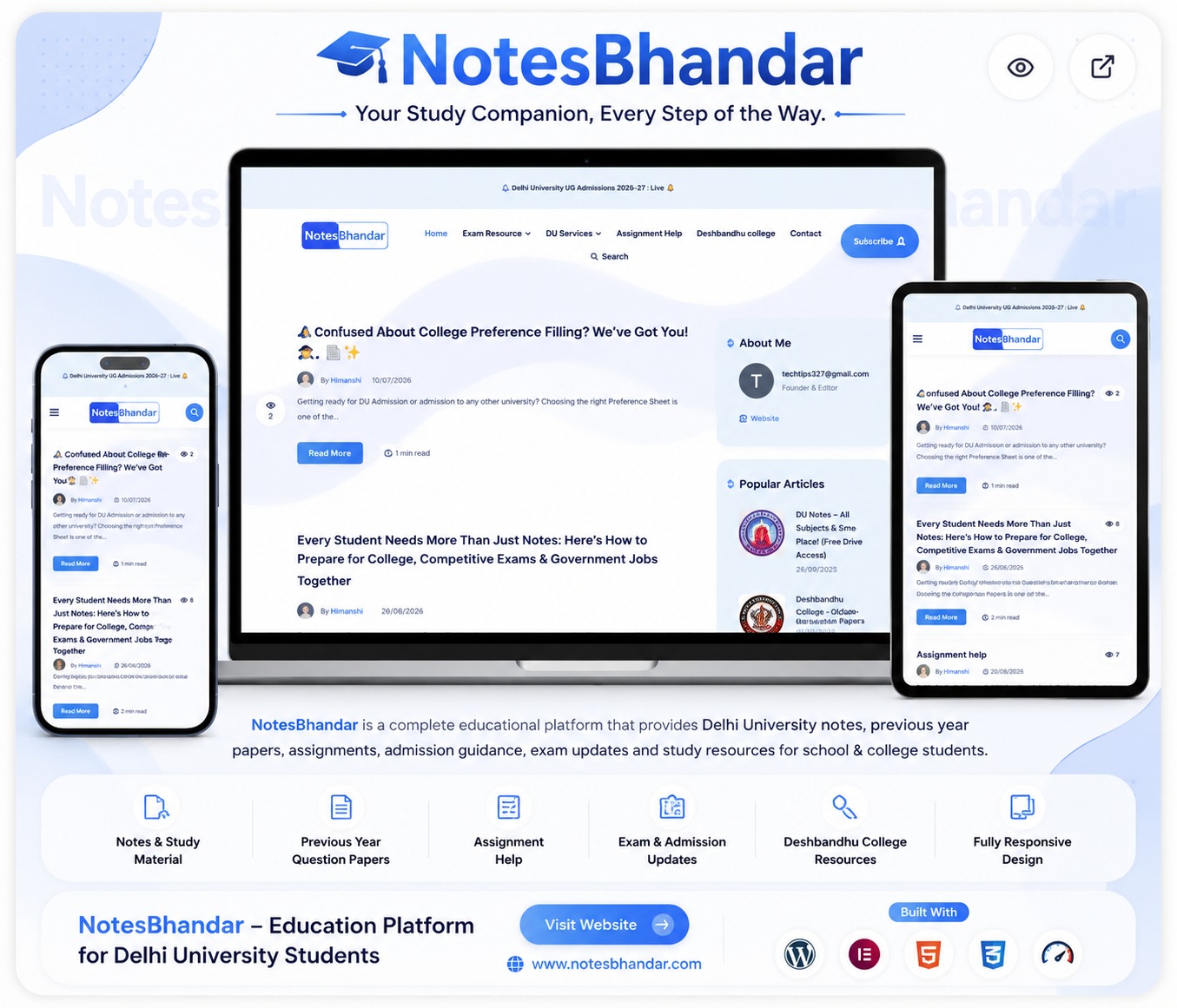
Building Content & Utility Platforms That Rank: NotesBhandar and FormSarthi Case Study
NGO Website Design in India: 4 Real Projects We Built (With Live Links)
Your Website Is Losing Half Your Leads in 3 Seconds — And You Probably Don't Know It
I Replaced 11 Tools With 5 AI Ones — Here's My 2026 Small-Business Stack (And What It Costs)